No miner left behind: building protection for Peru’s artisanal gold workers
OCIM has funded two projects aimed at providing insurance coverage for Minera Orex’s external miners and a plan to improve working conditions for its internal miners. These initiatives illustrate how the industry can combine social responsibility, safety, and sustainability.
Artisanal and small-scale mining (ASM) involves an estimated 300,000 to 500,000 workers in Peru, with approximately one million people directly or
indirectly dependent on the sector (MINAM, 2017)—making it a vital economic activity, yet one where informality leaves miners dangerously exposed. Without formal employment contracts, most artisanal miners work without health insurance, accident coverage, or pension plans, leaving them and their families with no safety net in the event of injury, illness, or death. The hazards they face daily are severe: rockfalls and tunnel collapses, prolonged exposure to toxic dust and mercury vapors, respiratory diseases such as silicosis, and accidents caused by rudimentary equipment and inadequate safety training. When incidents occur, families often bear the full financial burden—medical costs, lost income, or funeral expenses—pushing households deeper into poverty. This precariousness is compounded by a lack of awareness: many miners do not fully understand the risks they face or the protections that could be available to them. Addressing these urgent needs requires concrete initiatives that combine social protection, occupational health, and safety training.
Aware of this issue, OCIM has funded two projects between 2024 and 2025 organized by the Swiss Better Gold association with the Peruvian mining operator Minera Orex in the Arequipa region, aimed at improving safety, occupational health, and social protection for its artisanal miners.
Project 1: Insurance to protect external miners
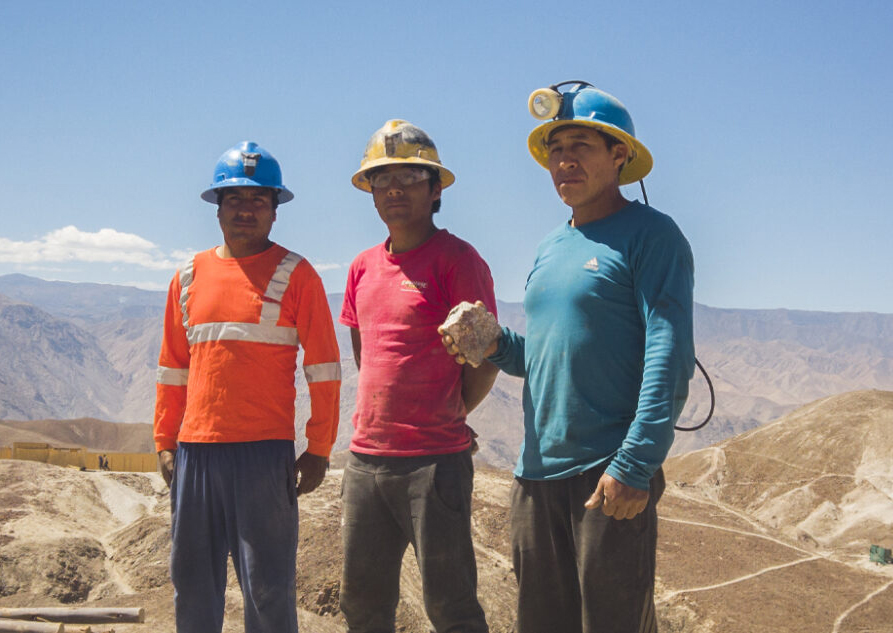
First, an observation: external miners (who sell their ore to Minera Orex) previously had no insurance against accidents or occupational illnesses, even though their work exposes them to major risks on a daily basis, including rockfalls, exposure to toxic substances, and various injuries.
To remedy this, an initial initiative consisted of financing comprehensive insurance for 200 miners covering workplace accidents (medical care, disability, death), occupational illnesses, and funeral expenses in the event of death. Despite high turnover and a lack of awareness of the benefits of insurance, 80 miners were covered between December 2024 and April 2025. This was a significant step forward, providing unprecedented social protection for these vulnerable workers, raising miners’ awareness of the importance of prevention, and laying the foundations for a self-financed model for miners in the future.
Project 2: Safety and environment for internal miners
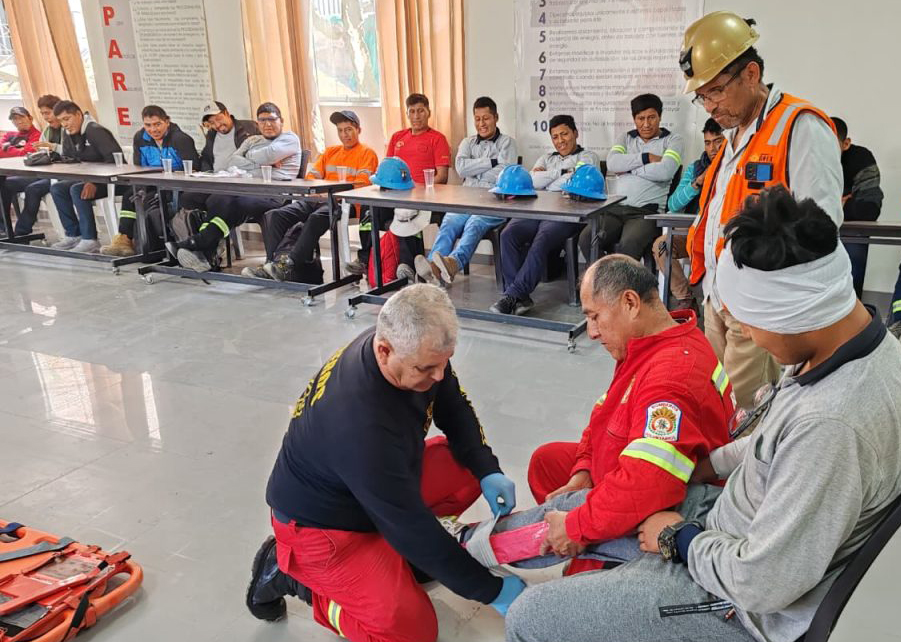
A second initiative, co-financed by OCIM and LVMH, this time targeted internal miners at Minera Orex (who are directly employed on the Orex concession). The project was built around a continuous improvement plan for health, safety, and the environment (HSE), already tested with 25 mining groups in 2023, targeting a wide range of actions:
1. Risk assessment in 20 mining groups covering 154 people.
2. Practical training in the use of personal protective equipment (PPE), explosives management, tunnel ventilation, first aid, and waste management.
3. Enhanced safety standards for signage in hazardous areas, emergency protocols, and simulation exercises.
Nearly 90% of the project has been completed to date, with measurable results already evident: a reduction in accidents thanks to improved prevention, an improved safety culture among miners, and increased traceability of the gold produced, meeting the requirements of responsible markets.
A model for the future of artisanal gold
These initiatives are fully in line with OCIM’s vision.
“These two projects complement the activities of our local subsidiary, Soleil Metals, whose purchase of ore from artisanal miners is already traceable and subject to responsible practices. They offer us additional leverage that is particularly effective in building a fully sustainable gold value chain in Peru, which is our long-term objective,” explains Laurence Mathiot, Director of Philanthropy at OCIM.
Beyond Minera Orex’s internal and external miners, these projects also prove that artisanal mining can be made safe and formalized. By combining social innovation, training, and partnerships, these initiatives are paving the way for a responsible gold industry, where everyone—from miners to consumers—wins. This is enough to consider participating in new initiatives of this type as early as this year.