“We bring Swiss banking-level compliance to artisanal mining”
A Swiss trained lawyer, Vanessa Hungerbuehler spent fifteen years at Credit Suisse and UBS, where she served as Executive Director and Deputy Head of Compliance for Geneva and Frenchspeaking Switzerland. Before joining OCIM, she co-founded Unravel One, a firm specializing in anti-money-laundering (AML), open-source intelligence (OSINT), asset tracing and compliance advisory. Since 2025, she has been responsible for overseeing the entire compliance framework, risk management strategy and ESG matters across the OCIM Group.
What does your role within the OCIM Group concretely involve?
As Head of Compliance, my primary role is to ensure that all activities of the OCIM Group are carried out in accordance with applicable laws and regulations both for OCIM Metals and Mining SA in Geneva and for our Peruvian subsidiary, Soleil Metals, which operates two gold processing plants in the south of the country.
As a company active in the precious metals sector, the OCIM Group is subject to both Swiss and Peruvian legislation governing the fight against money laundering and terrorist financing. In practical terms, this means that that OCIM must have an adequate internal organization allowing it to identify illicit operations at any time.. In this capacity, I advise the Group’s management on the development of processes governing our activities and on the implementation of effective internal controls.
Why is compliance central to OCIM’s value proposition?
While our activity consists of producing gold, the added value we bring to our clients — all of whom are LBMA-accredited refiners — is the guarantee that every ounce comes from a traceable, audited, and responsible supply chain originating from artisanal and small-scale miners (ASM).
Our model addresses a well-known paradox in the sector. More than 20% of the world’s gold production comes from artisanal mining, yet this production remains marginal in the supply of major refiners due to the lack of control over the upstream chain. Downstream players cannot assume the legal and reputational risk of uncontrolled sourcing.
This is precisely where OCIM intervenes: we bridge this gap by bringing a bankinglevel compliance framework to artisanal mining.
How does compliance at OCIM compare with compliance in a fi nancial institution?
As mentioned earlier, due to its activities, the Group is subject to international antimoney- laundering legislation, just like banking institutions.
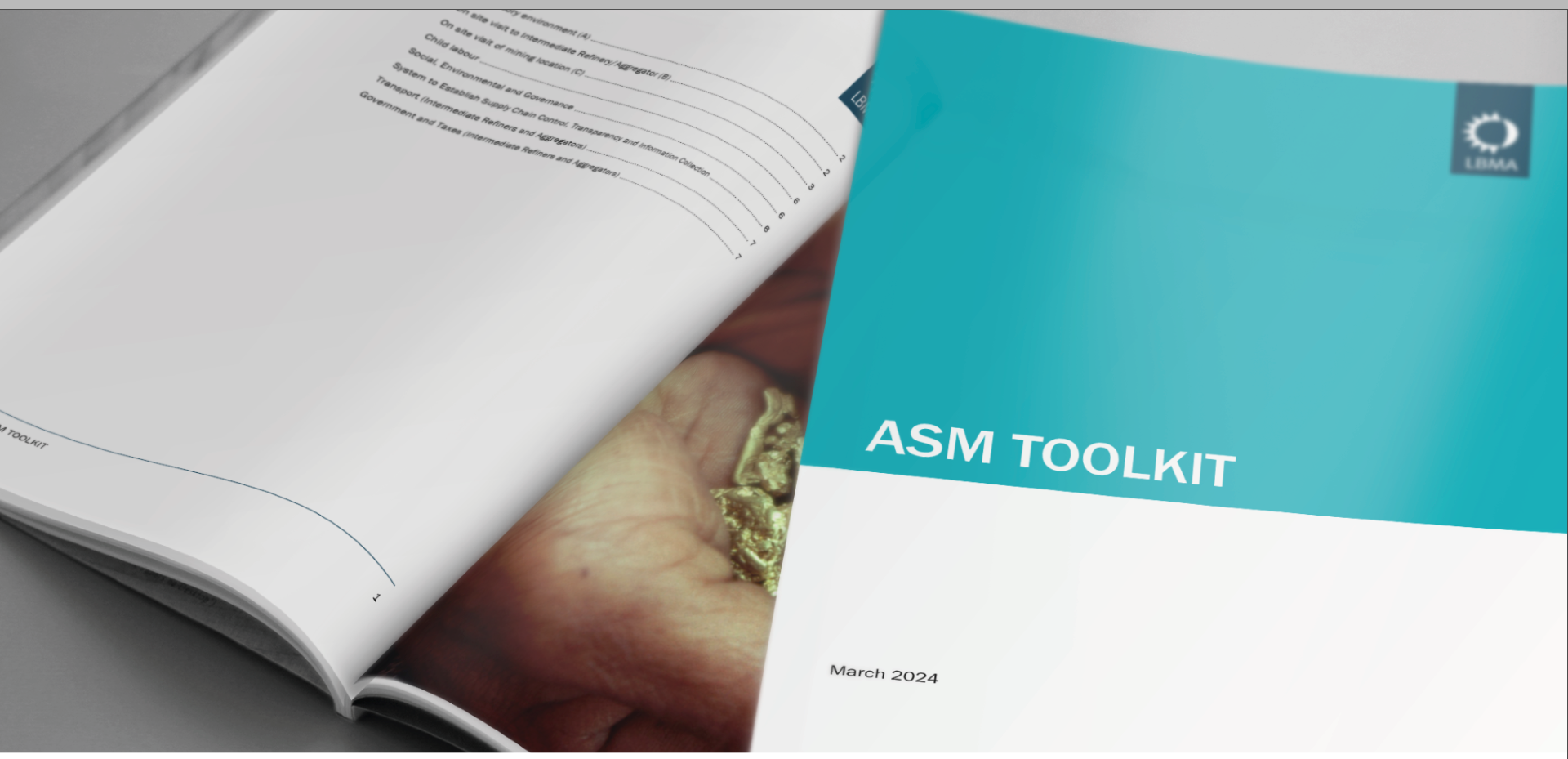
In this respect, and as in banks, the Know Your Customer (KYC) principle is one of the essential pillars of our controls. At OCIM, we apply very high, internationally recognized KYC standards, namely those recommended by the LBMA and dedicated to ASM mining, the LBMA ASM Toolkit.
What differentiates us from banks, however, is the multi-faceted nature of our compliance. OCIM does not only trade precious metals — it is also a producer. This dimension requires compliance with many standards beyond fi nancial regulations, such as ESG standards relating to environmental protection, human rights, labor law, and the specific OECD and LBMA rules regarding supply-chain traceability.
How is compliance structured within the OCIM Group?
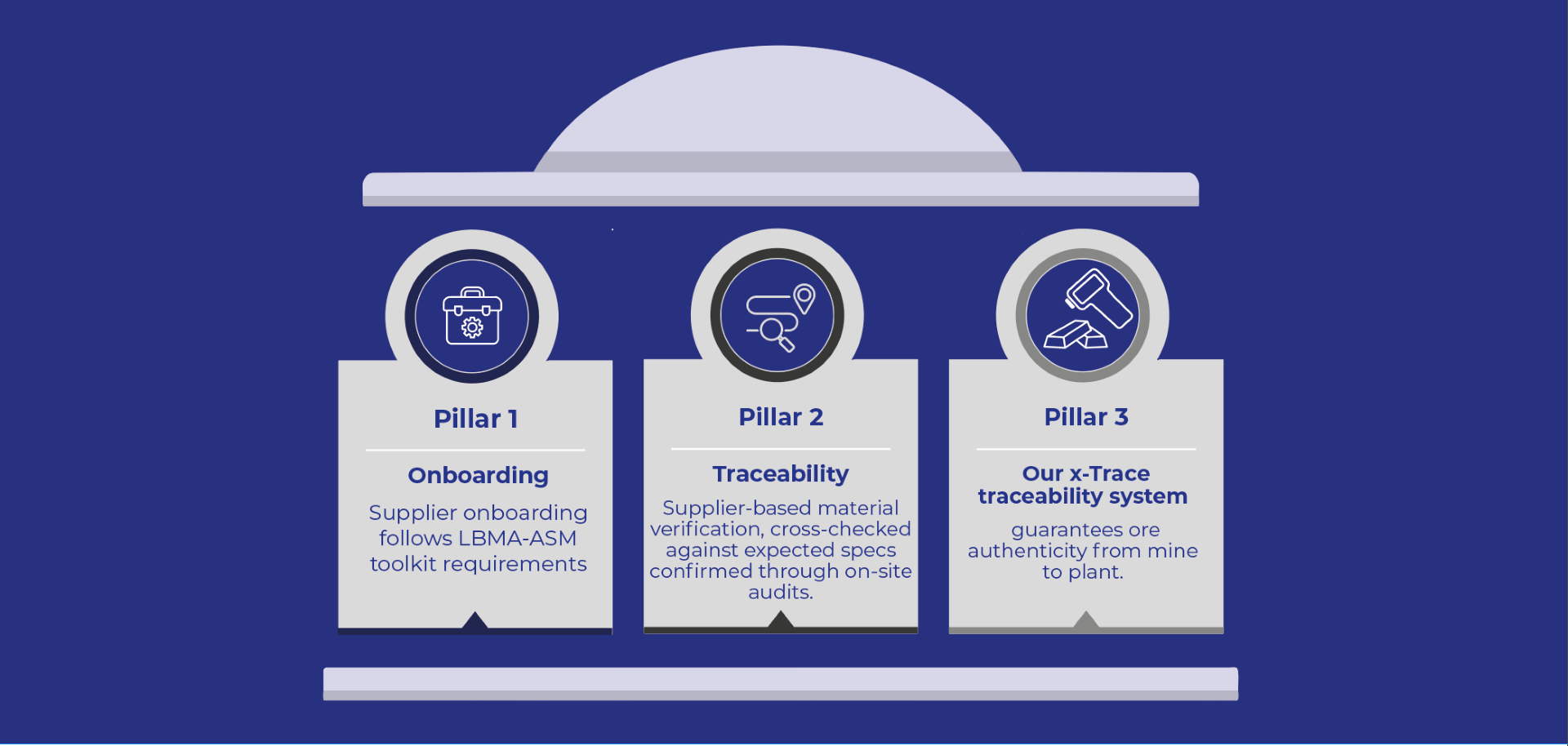
Our compliance framework is built on three operational pillars.
The first pillar is onboarding. Contrary to what one might think, onboarding does not start when the contract with the ASM miner is signed, but at the selection of the region where the miner operates and the community in which they work. This is a particularity of the mining industry: managing risk requires very strong knowledge of the country and its regions in order to determine which suppliers present the lowest intrinsic risk.
The onboarding process itself must meet the requirements of the LBMA-ASM toolkit. No fewer than 22 different documents are required from suppliers, both during onboarding and periodically throughout the business relationship. As with banks, we establish KYC files for our suppliers.
The second pillar is traceability of purchased material. Just as banks maintain client profi les, we systematically compare the purchased material with its expected characteristics, based on the information we have about the supplier and which has been confi rmed through on-site visits.
The third pillar is our x-Trace traceability system, based on technology developed by the Swiss company aXedras. This makes it possible to scientifi cally guarantee that the ore arriving at our plants actually comes from the audited mine and has not been substituted or mixed with ore of unknown origin.
The year 2026 will be a turning point for OCIM with the implementation of a computerized x-Trace alert system.
Soleil Metals recently obtained Step 1 of the Swiss Better Gold accreditation. What are the next challenges?
Swiss Better Gold (SBG) is an initiative led by an association of Swiss industrial players (refi ners, watchmakers, jewelers, financial institutions) with the support of the State Secretariat for Economic Affairs (SECO). Its approach is based on a “continuous improvement staircase” with several levels (Steps), each corresponding to increasing requirements in terms of legality, working conditions, environmental protection, and traceability.
The next step is implementing the requirements for Step 2, which concretely means deploying technical support and improvement programs with our suppliers. This is the most complex part of the certification for both SBG and OCIM, given the distances between the different mines and the geography of the country.
How does legal compliance interact with ESG labels such as Swiss Better Gold?
Compliance and ESG labels are deeply complementary at OCIM. Our compliance framework — AML, KYC, and traceability — forms the foundation on which ESG certifications are built. Without this foundation, no label is credible.
In practice, SBG criteria largely overlap with our own due-diligence requirements: verification of the legality of operations, absence of conflict financing, respect for workers’ rights, and environmental management. However, SBG goes further by adding a community-impact dimension through an impact premium collected from its members and reinvested locally.
Our ambition is to make compliance not a constraint but a real competitive advantage. When our processes are robust enough to satisfy Swiss AML law, the LBMA framework, and SBG criteria at the same time, we offer downstream partners a level of security that very few players in the artisanal mining sector can guarantee.
This is what allows us to position OCIM as a bridge between two previously disconnected worlds: Peruvian artisanal miners and international refiners, watchmakers, and investors.
And these processes must be scalable. Everything we have built in Peru is intended to be deployed in other regions. The roadmap is clear.