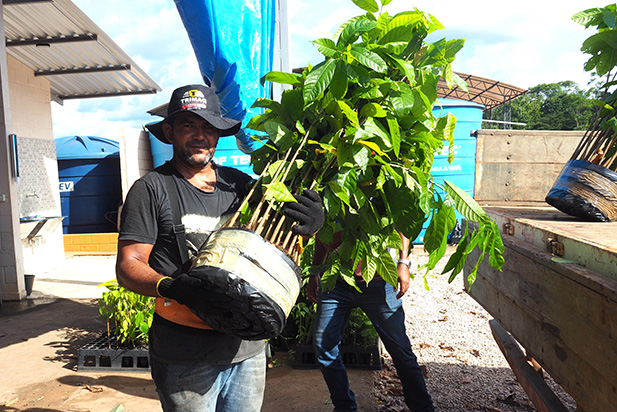
The Amazon is at the crossroads of major but contradictory issues for the future of the planet. An important mining region, it is also the victim of a massive decline in its forest cover, which is suffering from the expansion of areas dedicated to soya cultivation and livestock farming despite its key role in carbon sequestration and the preservation of biodiversity. The WWF estimates that on average 42,000km2 are deforested in the Amazon every year, representing a rate of 0.6% in Brazil and 1.7% in Ecuador. Over the last 40 years, the Amazon forest has lost up to 20% of its surface area.
To help regenerate this fragile forest ecosystem, OCIM decided to take part in the Rondônia reforestation project. The project is being implemented in the heart of the eponymous state, in the south-west of the Brazilian Amazon. This region is an integral part of the “arc of deforestation”, the area of the Amazon where the agricultural frontier with intensive livestock farming has generated the most illegal deforestation in recent decades.
The Rondônia project: a partnership between the ReforestAction platform and the NGO Rioterra
The operation was initiated and piloted by French reforestation and agroforestry specialist Reforest’Action. The company was set up in 2010 to regenerate agroforestry ecosystems around the world in response to the climate emergency and the erosion of biodiversity. Its mission is to select, support and ensure the quality of forestry projects in order to develop their multifunctionality over the long term.
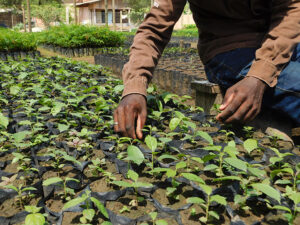
As part of the Rondônia project in Brazil, its team is working with local partner Rioterra. This NGO was set up in 1999 with the aim of proposing a development model for the Amazon region that combines conservation and sustainability with improving the quality of life of local people. Now the owner of the plot, Rioterra coordinates the implementation of the project on the ground, monitors the trees planted and trains local communities in good agroforestry practices.
 What does the Rondônia project actually involve?
This initiative, the first of its kind in Amazonia, covers a total area of 900 hectares to be protected. The aim is to plant a total of 100,000 native trees on 40 hectares of degraded forest. The seeds collected by Rioterra will be used to produce seedlings in the NGO’s nursery. 87 different species will be introduced, including endangered species. In the end, 2,500 trees will be planted on each hectare, divided equally between two functional groups: cover and diversity. The ‘cover’ functional group is made up of fast-growing species that will shade out invasive weeds and develop the structure of the forest, while the ‘diversity’ group is made up of several native species that will flourish under the ‘cover’ group and thus ensure the resilience and diversity of the forest over the long term.
OCIM’s ESG commitment: the well-being of environmental and human ecosystems
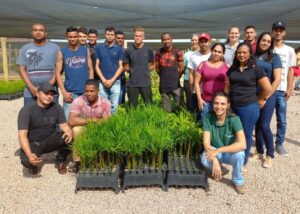
The entire replanting process is carried out by members of local communities concerned about preserving their Amazon territory. Rioterra offers training to project participants so that they can acquire the keys to autonomous and respectful development. The programme not only helps to increase local incomes through forestry activities, but also raises awareness among residents and farmers of the need to preserve the trees planted over the long term.
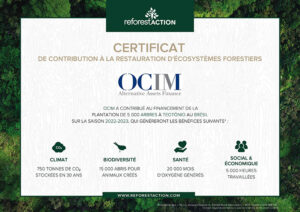
Aware of the environmental and social issues linked to its investment sector, the Rondônia project is one of the ESG commitments that OCIM is committed to making. As an integral part of a more global approach, this contribution will enable the planting of 5,000 trees to help store carbon over the long term.