Responsible gold is no longer an experimental subject: a reading of the SBG Impact Report 2025
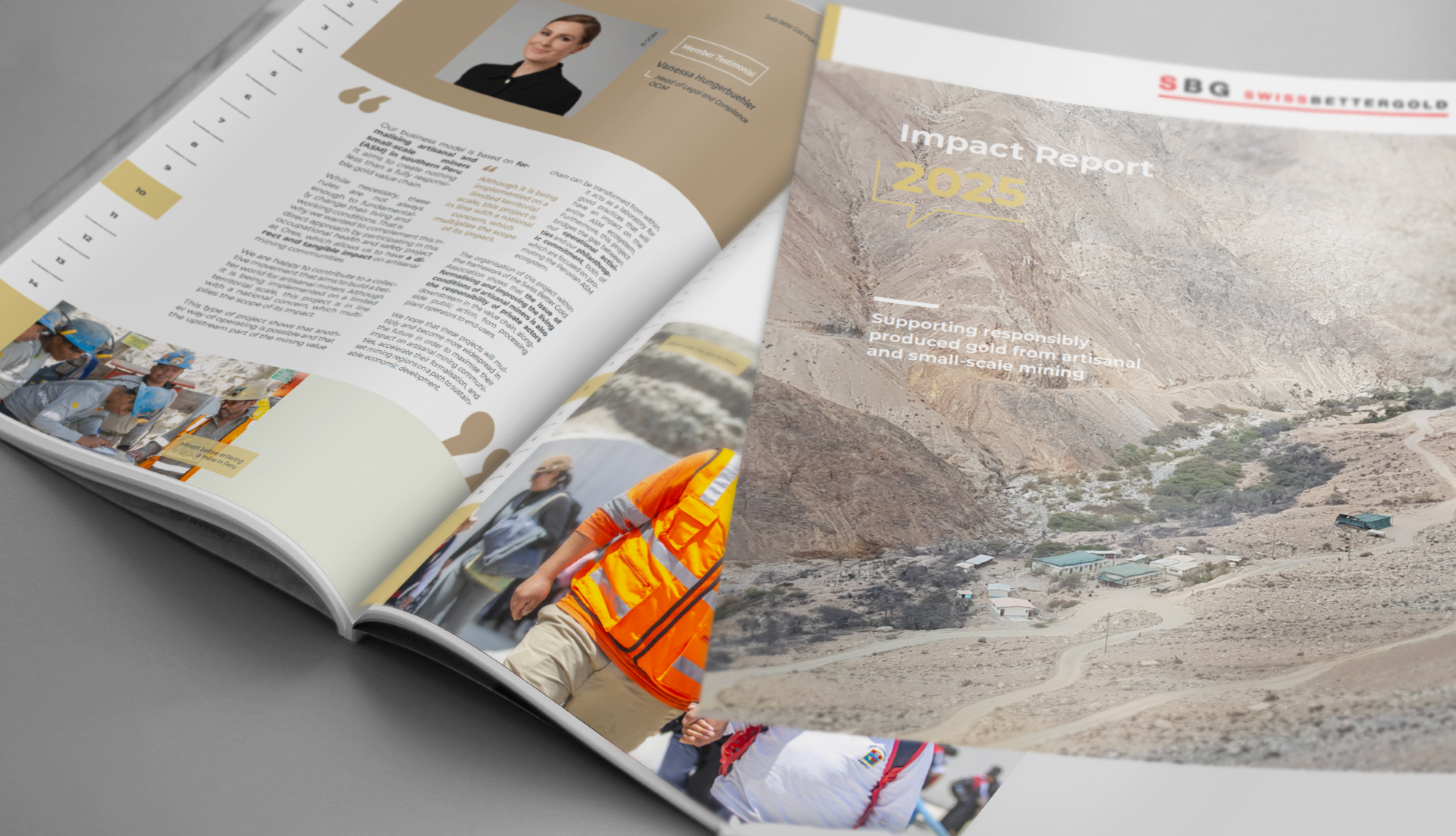
Responsible gold has become a concrete subject. This is the implicit conclusion of the report recently published by Swiss Better Gold (SBG), which makes legible an institution that documents itself, opens its governance and articulates its economic thesis with growing clarity. OCIM, present in the report through its Peruvian subsidiary Soleil Metals and through the co-financing of concrete actions for miners, illustrates this transformation at its own level.
Let us begin with the report itself and, among the many points it raises, highlight three notable developments.
A further step in transparency
First signal. While SBG already published the names of accredited mines and their country-by-country mapping and disclosed the number of suspended operations, the 2025 report goes further on two specific points. Full export routes (mine, trader, refiner) are now published, including for operations still in the Step 1 process. And SBG has made public its crisis and accident management mechanism, formalised this year. These two additions change the qualification of the dispositif: it goes beyond the simple certification of operations by making visible the conditions under which its decisions are made and corrected.
A governance that opens up
Second signal, structurally important for what comes next. SBG expanded its board of directors in June 2025 to include two civil society representatives: Fernando Fernandez (Wyss Academy for Nature) and Rebecca Villalobos (RESOLVE). These two directors hold the same rights and duties as other board members and sit on specialised committees.
These appointments complete the governance architecture by adding the voice of civil society to the decision-making body. The dispositif, which has operated since 2013 in partnership with the Swiss State Secretariat for Economic Affairs (SECO), thus shifts from a public-private governance to a public-private-civil governance. The contribution of these new voices is, first and foremost, structural: Fernandez and Villalobos have no economic exposure to the ASGM chain, which gives them the latitude to formulate internal challenges that market actors could not raise with the same credibility.
This contribution is also operational. Fernando Fernandez, on the Accreditation Committee, works to strengthen the way data and analysis inform decisions on due diligence and continuous improvement, while Rebecca Villalobos, on the SBG Fund Committee, focuses on directing co-financing toward needs identified by the miners themselves. These two perspectives, one academic, the other rooted in field experience, open the dispositif to constructive and productive internal debate.
An operational reality that is broadening
Third signal: the figures. 5,335 kg were exported in 2025, nearly half of which came from operations at Step 1, the rest from fully accredited mines. Twenty-seven mines accredited at Step 2 or 3 and eleven operations in the Step 1 process. To Peruvian and Colombian operations are now added five Mongolian ones and SBG has also introduced this year dedicated models for processing plants, extending the perimeter beyond historical typologies.
These volumes remain modest against global gold production (around 3,600 tonnes per year). But they are no longer negligible and above all, their structure, which is documented all the way to the refiner, now makes them exploitable for institutional supply chains.
And what about OCIM?
The report mentions OCIM at two distinct points.
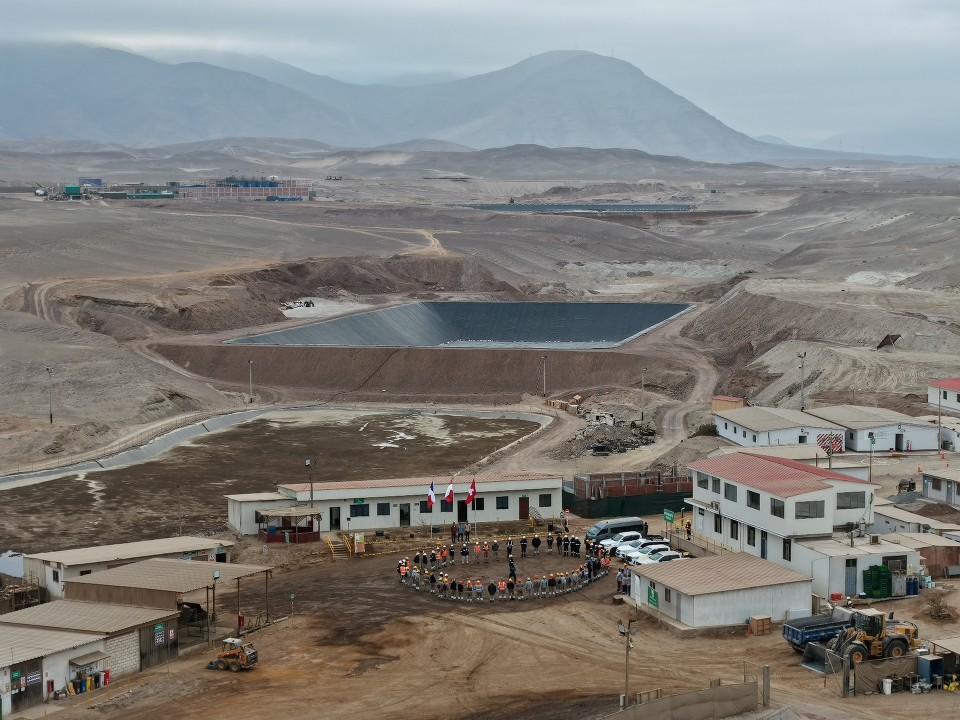
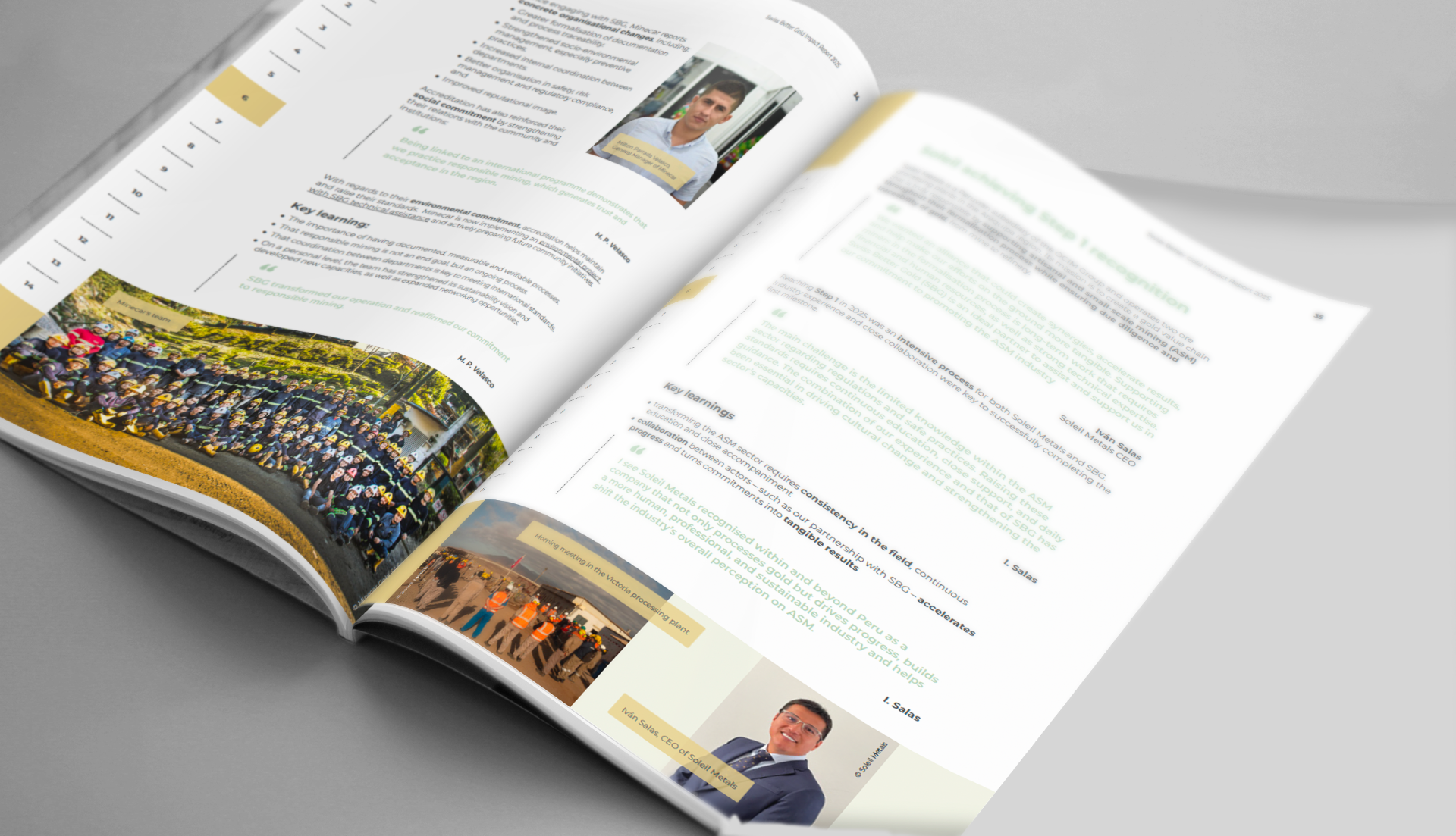
On the one hand, Soleil Metals, the group’s Peruvian subsidiary, is among the operators that reached Step 1 this year, with its two plants in the Arequipa region, Yacari and Victoria. Iván Salas, its CEO, presents this accreditation as a strategic alliance with SBG, which accelerates a formalisation effort built over time.
On the other hand, OCIM is mentioned as a Support Member of SBG through the projects co-financed this year at Minera Orex, a Peruvian operator independent of the OCIM chain. Two projects were deployed: an occupational health and safety programme for internal miners on site and accident insurance coverage for external artisanal miners selling their ore to Orex, in a sector that had until then been considered uninsurable by insurance companies. Vanessa Hungerbühler, Head of Legal and Compliance at OCIM, describes these projects as “a laboratory for good practices” in her testimony published in the report.
This dual presence reflects the group’s posture: acting on both sides of the chain where its position allows. As a producer through Soleil Metals, which is engaged in the sector’s accreditation process. As a member through OCIM, which contributes to the financing of sectoral projects from which other operators benefit. These are two distinct gestures, in two distinct registers, but they share the same conviction: that the viability of a responsible chain is built through concrete dispositifs, demonstrated on the ground.