Building a responsible gold value chain: lessons from Peru
Artisanal and small-scale mining (ASM) accounts for nearly 20% of global gold production and provides a livelihood for approximately 20 million people worldwide. And yet, ASM gold remains structurally marginalized in the supply chains of major refiners.
Why this paradox? Not because the gold is of poor quality, nor because miners refuse to formalize their operations. Rather, it is because no operator has truly positioned itself to reconcile the conflicting realities of artisanal and small-scale miners (high level of informality, non-compliant social and environmental practices…) with those of major institutional buyers (full origin traceability, OECD & LBMA compliance, zero-risk tolerance, documented due diligence per shipment, independent audits). This difficulty in establishing a truly responsible gold value chain is therefore primarily a structural issue.
The good news is that this structure can be built, audited and made commercially viable, as demonstrated by OCIM’s experience in Peru through its subsidiary Soleil Metals.

WHY PERU ?
Not all ASM jurisdictions offer the same starting conditions. Peru is certainly not a perfect environment. But, as confirmed by the World Gold Council’s study on processing plants in six ASM countries, it is one of the few contexts where the model can work. Three structural factors explain this.
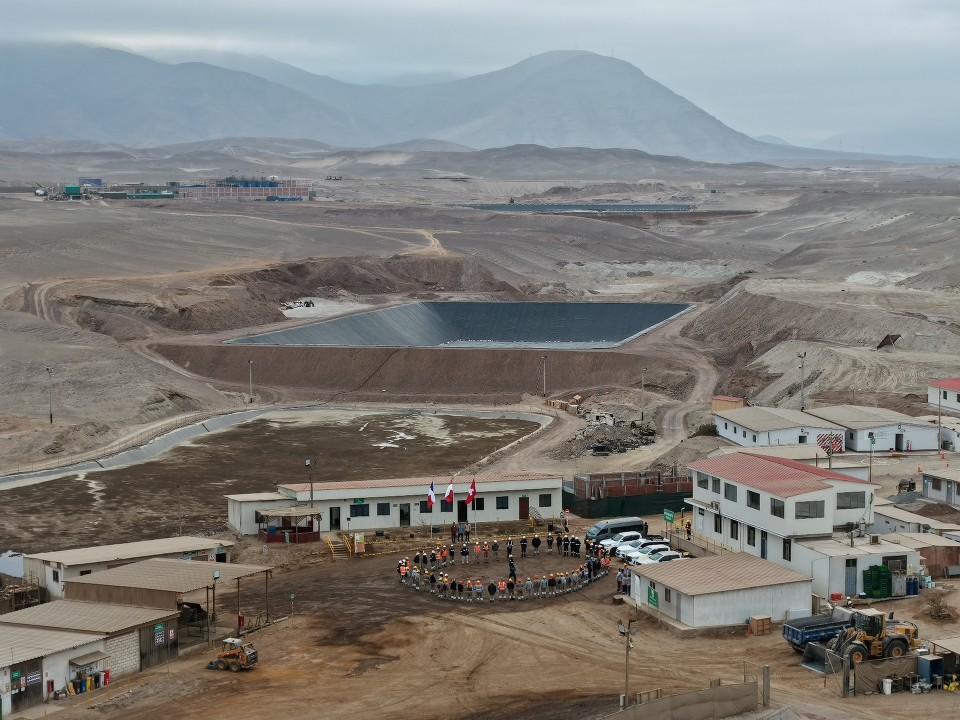
A mature mid-chain. Peru has a vast network of processing plants that receive ore from artisanal and small-scale miners, process it without mercury and produce exportable doré bars. This presence is far from insignificant. According to the WGC/Levin Sources study, an artisanal or small-scale miner working alone using mercury amalgamation recovers only 30 % to 40 % of the gold contained in their ore, whereas these processing plant achieve over 90 %. This difference is therefore a powerful driver of transformation, not only environmentally but also economically. This additional revenue generated is precisely what makes formalization financially accessible to artisanal and small-scale miners who could not absorb the cost on their own. More fundamentally, the processing plant is also the only viable control point and regulatory bottleneck in the chain.
An existing regulatory framework.With the creation of REINFO (Comprehensive Mining Formalization Registry) in 2016, Peru has been implementing a structured approach to integrating artisanal and small-scale miners into the formal economy. This national registry lists miners in the process of formalization across all regions of the country and allows an operator to verify in real time a supplier’s legal status, concession and tax status. Its contribution is decisive, as processing plants are authorized to source from miners in the process of formalization, and not only from those who have completed the process. This is what has enabled the gradual inclusion of tens of thousands of artisanal and small-scale miners into formal channels.
Its limitations are well-documented. The registry has, in fact, been exploited by “billing agents” who rent out their REINFO status to illegal operators to allow them to sell their products legally. While it is not sufficient on its own to guarantee the legitimacy of mining operations and requires extensive independent verification, the establishment of a public registry such as REINFO nevertheless appears to be a necessary condition for creating a responsible value chain leading to the formalization of miners.
A manageable level of exposure to organized crime. Peru is certainly not free of organized crime in the ASM sector. This reality must be acknowledged honestly. However, this exposure is geographically localized and can be mapped: operating in Arequipa, Chala and Nazca does not present the same risk profile as operating in other parts of the country. Careful selection of operating areas, combined with continuous monitoring of suppliers capable of detecting status anomalies, inconsistencies between declared concessions and production volumes or unreported changes in legal representatives, thus helps limit this type of exposure.

WHAT MUST BE BUILT ON TOP
Peru’s structural conditions create a favorable environment. However, they cannot alone lead to the creation of a responsible gold value chain from scratch. Our experience through our local subsidiary Soleil Metals has led us to build three complementary pillars.
The first is a bank-level compliance framework applied at every stage. During onboarding: 25 documents per supplier, covering the legal entity’s registration, mining title, beneficial owners, tax status, compliance with the LBMA-ASM Toolkit and an initial improvement plan. For each transaction: nine systematic checks enabling real-time verification of legal status, tax data or declaration of mercuryfree extraction. This last element deserves special attention as it is a contractual obligation that binds both the artisanal or small-scale miner and us with every purchase.
Then, there is the question of traceability. xTrace™ technology, which combines chemical fingerprinting, artificial intelligence, spectrometry and blockchain, scientifically and legally confirms that the ore received at the refinery does indeed match its declared origin. Soleil Metals has thus completed the world’s first delivery fully verified by xTrace™, destined for ArgorHeraeus as part of a process endorsed by the LBMA and the World Gold Council.
Finally, the physical chain of custody documents six sequential stages from the mine to the refinery, each of which is traceable as part of a process reviewed and validated by Swiss Better Gold.
The result: the Peruvian ASM artisanal gold produced in this way is delivered to LBMA Good Delivery accredited refiners, effectively promoting the actual formalization of the miners.
THREE LESSONS WE’VE LEARNED FROM OUR EXPERIENCE IN PERU
1- Compliance creates strategic value. Operators who treat traceability as a regulatory constraint apply it minimally, whereas those who treat it as a commercialn differentiator make structural investments. This choice of framework determines whether traceability is window dressing or a foundational structure. LBMA membership, access to top-tier refineries and SBG recognition are the return on this investment.
2 – The trust of artisanal and small-scale miners is a prerequisite. The main obstacle to formalization in Peru is the mistrust of artisanal and small-scale miners. They have historical reasons to distrust formal operators: unfair prices, disputed assay results and dependence on advances that become a trap. What we have built beyond the compliance framework is a business model where traceability is accompanied by a fair price, a stable long-term business relationship and active support throughout the formalization process, including the gradual integration of ASM communities into the formal economy. Without this reciprocity, the creation of a responsible ASM value chain would be impossible.
3 – Institutional infrastructure does not replace the operator. LBMA, OECD, Swiss Better Gold, RMI… The ASM sector is not lacking in standards. But while these norms define and validate, they do not do the work. What is missing is therefore the presence of intermediary operators who implement these standards and enforce them on the ground: by building processes, investing in tools, training teams and above all, assuming the legal and reputational consequences of a breakdown in the chain.
BEYOND PERU : A PROOF OF CONCEPT
The Peruvian model is not a universal recipe. Other ASM jurisdictions present genuinely different constraints: absent mining registries, more deeply entrenched organised crime, a non-existent midchain… But the underlying question is the same everywhere: how to create a documented, auditable and economically viable passage between the artisanal mine and the international market? Where the three conditions identified in Peru exist or can be created, the model transfers.What does not transfer automatically, however, is the operator. Standards, certifications and public registries are tools. What transforms informal gold into traced gold is the actor who chooses to implement them, who bears their cost, assumes their responsibility and stays in the chain when it gets complicated.
That is, in the end, the simplest and most difficult lesson the global ASM sector has yet to fully absorb.