Gold from the Guiana Shield: the missing link of processing plants
Legal gold production in French Guiana appears to have reached a ceiling, even as illegal gold mining continues to expand, with well-documented environmental consequences. While current public policies primarily target miners and their suppliers, a complementary solution could lie further downstream, through the creation of directly controllable processing plants. This is what our Peruvian experience teaches us for the Guiana Shield.
Despite a slight decline, the price of gold now stands at around 4,500 dollars per ounce, a level three times higher than barely four years ago. This should be good news for French Guiana, which sits on one of the largest gold reserves on the planet. And yet, its legal sector is stalled or bypassed, with catastrophic environmental consequences. What can be done in this context?
Structural limitation of public policies
Public policies have so far consisted in intensifying the fight against illegal miners and destroying their production and logistical tools. Although necessary, this repressive approach nevertheless comes up against a structural limitation. The increase in obligations faced by declared operators under the new mining code widens the competitiveness gap with the informal economy, creating a strong pull in favour of the latter. A few months ago, the commander of the gendarmerie in French Guiana acknowledged that the fight against illegal gold mining had reached a “glass ceiling” with current staffing levels. Five months later, the administrative court of Cayenne examined a claim of wrongful failure against the State regarding mercury pollution in the Upper Maroni region.
Structuring the middle of the chain
The answer to this deadlock is multifaceted and must go beyond the upstream part of the chain alone. Another element of the solution must be sought further downstream, through the widespread deployment of processing plants that would allow authorities to strengthen their control over the sector and indirectly influence practices. Concretely, these structures purchase raw ore from artisanal and small-scale miners and transform it into doré bars exported to LBMA-accredited European refiners. They therefore act as aggregation points connecting two previously disconnected worlds: miners operating in a grey, or even black zone, with highly problematic environmental practices, and institutional buyers complying with demanding international standards.
A direct impact on mercury pollution
This type of actor has a transformative effect upstream through two complementary mechanisms. The first is economic incentive: the recovery rate of these plants (more than 90%) is two to three times higher than the mercury amalgamation process massively used by illegal miners. Hence a significantly higher income for an equivalent extracted volume. The second is entry control: every batch of ore is tested before purchase, and the presence of residual mercury results in rejection. The combination of incentive and control therefore acts where prohibition alone, difficult to enforce in the middle of the equatorial forest, fails.
The processes used admittedly require the use of cyanide, which to date remains the only chemical reagent capable of selectively dissolving the gold contained in crushed ore. However, this cyanidation is carried out in a closed circuit, which causes neither bioaccumulation nor chronic contamination of waterways. The practical challenge on the ground in the Guiana Shield is therefore to replace uncontrolled mercury use in nature with cyanide recycling in its soluble fraction (and destruction of its residual fraction) within audited industrial facilities.
What the Peruvian experience teaches
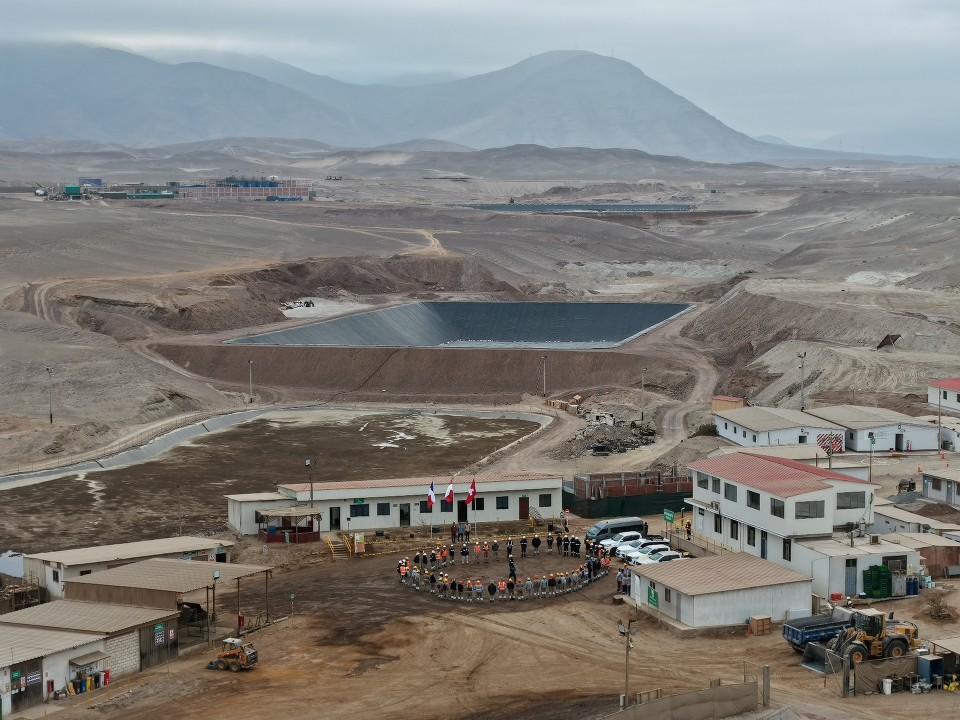
This model is not new. It exists notably in Peru, where the artisanal and small-scale gold sector represents a volume comparable to industrial production, namely around one hundred tonnes per year. This scale-up has been accompanied by the widespread deployment of plantas, these industrial processing plants that purchase ore from declared miners, process it and integrate it into a traceability chain all the way to the refiner. This is precisely what we do through our local subsidiary Soleil Metals, which aims for a production of one tonne of gold equivalent in 2026 through its two plants Yacari and Victoria and its nearly 300 partner miners. These plants have been recognised as compliant with the first step of the Swiss Better Gold certification process, whose requirements in terms of regulatory compliance, traceability and transparency open the doors to LBMA-accredited European refiners and major end-buyers (jewellers, banks).
What lessons for French Guiana?
This model certainly does not solve everything. It coexists with a persistent informal economy, requires constant effort and above all, its implementation depends on a very specific economic, institutional and security context. But three lessons appear transferable to us. First of all, structuring organised and controlled actors in the middle of the chain has a major impact on upstream extraction practices, which they gradually integrate into the formal economy. To play this incentive role, these plants must also become trusted actors, which requires a structured and audited organisation ranging from onboarding to georeferencing and batch traceability. Finally, compliance with international standards (LBMA, Swiss Better Gold, OECD Due Diligence Guidance, Responsible Gold Guidance) must cease to be viewed as an administrative cost, but rather as a necessary and profitable investment opening access to institutional markets.
Planets aligning
This type of model benefits from a favourable international context. To growing institutional and regulatory pressure (generalisation of labels, Minamata Convention) and the tightening of sourcing policies by end-buyers (reputational exposure, stricter extra-financial obligations such as the European CSRD directive) is added the multiplication of media investigations and their denunciation of undocumented gold chains reaching some of the most institutional buyers. And ultimately, civil society as a whole becomes increasingly aware and demands change.
At a time when untraceable chains without documented compliance guarantees will become increasingly difficult to operate in the future, the creation of responsible gold value chains could become tomorrow’s norm. The Guiana Shield can either undergo this transition or get ahead of it by building now the formal network that will make it competitive on the most demanding markets. The condition: rethink its entire value chain, starting with its middle.